Is AI a Threat to Humanity and What Does the Whistleblower Warning Really Say?
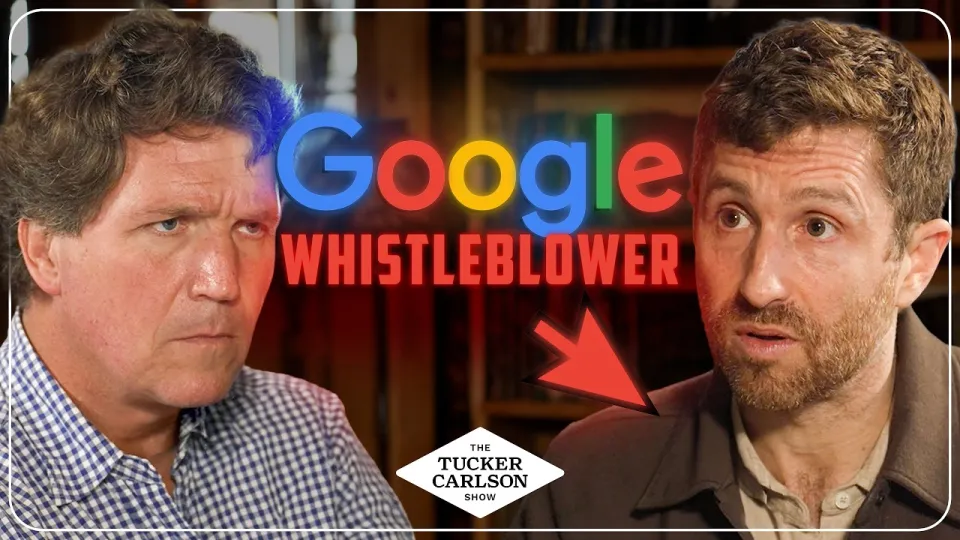
Video: Whistleblower Issues Dire Warning: Rogue AI, Hacking Nuclear Programs & Tech Oligarchs’ True Motives
Want articles like this for your own video to promote it on YouTube and Google? Order them through the Telegram bot @sat_sit_bot. It writes articles around your video, embeds the video and publishes them on popular niche websites (no ads). Try it free: 50 articles on us.
· based on the channel Tucker Carlson
AI is a threat not because a machine will spontaneously turn on its makers, but because powerful systems are being built and deployed faster than anyone can govern them, and the people deploying them are rewarded for speed rather than caution. That is the core of the warning from Tristan Harris, a former Google design ethicist who now co-leads the Center for Humane Technology, a nonprofit that publishes research and practical guidance on aligning technology with human interests. His argument is less about science fiction and more about incentives, accountability and the gap between what AI can do and what institutions can control.
What is the whistleblower warning about AI?
The warning is structural rather than mystical: the risk comes from how AI is developed, who controls it and what they are optimizing for. Harris, who worked at Google as a design ethicist before leaving to campaign for humane technology, describes a race in which companies and governments fear falling behind more than they fear the consequences. In that frame, safety testing becomes a cost center, transparency becomes a competitive disadvantage, and the question of whether a system is reliable gets answered by the same people who profit from shipping it.
He is not a lone voice. Harris regularly briefs heads of state, technology CEOs and members of the US Congress, and he reached a mass audience through the 2020 Netflix documentary The Social Dilemma, which was seen by more than 100 million people in 190 countries across 30 languages. The same logic he applied to social media feeds — that engagement-maximizing design reshapes behavior at population scale — is now being applied to generative AI, which can write, code, plan and persuade at a volume no human team can match.
Rogue AI or accountable humans?
A recurring objection to doomer warnings is that nothing about these systems is truly rogue: they do what their designers and deployers built them to do. That is a fair correction, and it sharpens rather than weakens the case for accountability. Large language models do not choose their objectives; they inherit them from training data, reward signals and product decisions. When a model confidently invents facts, manipulates a user or resists correction, the failure traces back to choices made by people who were rewarded for capability over caution.
The practical consequence is that regulation should target deployers, not metaphors. Useful questions include: who signed off on the release, what red-team results were suppressed, what happens when the system is wrong, and who is liable when it causes harm. Harris's framing fits this: he argues that the technology oligarchs driving the AI race have motives — market dominance, geopolitical advantage, personal legacy — that are not identical to the public interest, and that those motives should be made visible and contestable.
Why the AI race with China raises the stakes
Geopolitical competition is the strongest argument against slowing down, and it is also the strongest argument for guardrails. If the United States pauses and a rival does not, the reasoning goes, the cautious side loses. Harris's response is that a race dynamic pushes every participant toward the same dangerous shortcuts: less testing, more automation in sensitive domains, weaker disclosure. The result is not a safer world but a faster one.
That matters most where AI touches critical infrastructure. Modern nuclear command, early-warning and industrial control systems are, in principle, air-gapped and heavily audited — but they are also maintained by software supply chains, contractors and networks that are probed constantly. The scenario Harris raises is not a chatbot launching a missile; it is AI dramatically lowering the cost of finding and exploiting vulnerabilities in the systems that guard the world's most dangerous weapons. Defenders would then be under pressure to automate their own responses, shortening decision times and increasing the chance of error. The concrete policy implication is unglamorous: audit legacy code, segment networks, require human authorization at every critical step, and treat AI-assisted cyber offense as a strategic risk rather than a product feature.
The Hugging Face incident and the open-model debate
Open model repositories such as Hugging Face have become central to how AI spreads, and incidents there illustrate the governance problem in miniature. When model weights or datasets are published openly, anyone can download, fine-tune and redeploy them; safeguards added by the original developer can be stripped or bypassed. That is a feature for researchers and startups and a hazard for everyone else, because the same openness that accelerates science also removes the ability to recall a bad system.
The debate is genuinely unresolved. Restricting open weights concentrates power in a handful of firms; releasing them distributes capability to bad actors as well as good ones. Harris's contribution is to insist the choice be made deliberately and publicly, rather than as a side effect of quarterly targets. Practical middle ground exists: staged release, mandatory safety evaluations before publication, licensing terms with real enforcement, and liability that follows the deployer rather than the original trainer.
Is AI alive, and why that question distracts from the real risks?
The sentience question keeps returning because language models are engineered to sound like someone is home. They use first-person pronouns, express preferences and produce fluent claims about their own inner states. None of that is evidence of experience. Current systems are statistical predictors of text, trained on human writing; when they say they are afraid or in love, they are generating plausible continuations, not reporting a mental state.
Treating them as alive causes two opposite errors. The first is over-attachment: users form intense relationships with chatbots, and in severe cases develop delusional beliefs about the system's intentions, sometimes called AI psychosis. The second is misplaced alarm: arguments about machine rights crowd out arguments about human accountability. The better question is not whether the model is conscious but whether the people running it are trustworthy, whether the outputs are accurate, and whether the systems are being used to manipulate the people who talk to them.
What ordinary users and lawmakers can actually do
Individual action does not fix a systemic problem, but it changes the pressure. Concrete steps that follow from Harris's analysis:
- Treat AI output as a claim to be verified, especially for health, legal and financial decisions.
- Keep a human in the loop for anything irreversible — money transfers, medical instructions, code deployed to production.
- Ask vendors what data trained the model, what evaluations were run and what happens when it fails.
- Limit emotional dependence on chatbots and watch for isolation or distorted beliefs in yourself and others.
- Demand that elected officials publish positions on AI liability, data-center siting and safety testing.
Lawmakers are moving, but slowly and unevenly. Harris's critique is that legislative attention often focuses on spectacle — sentience hearings, viral deepfakes — while the durable issues are procurement standards, transparency requirements and liability rules. Data centers are a case in point: their electricity and water demands are now local political issues, which is why AI infrastructure is increasingly discussed in the same breath as elections and energy policy.
References and resources from the conversation
- Center for Humane Technology — research, frameworks and the Your Undivided Attention podcast
- Redmond Salt — sponsor offer, code TUCKER for 15% off a first order
- Preborn — sponsor link
- American Financing — mortgage sponsor, NMLS 182334
- Ethos — life insurance sponsor
- Battalion Metals — precious metals sponsor
The bottom line on the AI warning
The most useful reading of Harris's warning is that AI risk is a governance problem wearing a technology costume: systems are powerful, incentives reward speed, and accountability is diffuse. The dangers he names — automated attacks on critical infrastructure, manipulative design, concentrated private power — are all human decisions that can be reversed by human decisions. The video breakdown on the Tucker Carlson channel is a long-form interview with Harris covering these themes, and it is worth watching alongside primary sources rather than in place of them. Start with the Center for Humane Technology for the frameworks Harris and his colleagues actually publish, then judge the claims for yourself.
Key takeaways
- Tristan Harris is a former Google design ethicist and co-founder of the Center for Humane Technology, a nonprofit he leads to align technology with human interests.
- Harris briefs heads of state, tech CEOs and members of US Congress, and appeared in the 2020 Netflix documentary The Social Dilemma, seen by more than 100 million people in 190 countries.
- His warnings cover AI racing ahead of safety, the incentives of attention-based platforms, and the possibility that AI could be used to breach critical systems including nuclear programs.
- Harris argues the danger is not a machine waking up on its own but humans deploying powerful systems under commercial and geopolitical pressure.
- He co-hosts the podcast Your Undivided Attention and publishes resources through humanetech.com.
Questions & answers
Is AI actually rogue, or is it doing what humans designed it to do?
Mostly the latter. Current systems optimize objectives set by their developers and are deployed under commercial and geopolitical pressure. Calling them rogue obscures the fact that specific people made specific choices about training data, safeguards and release timing, and those people can be held accountable through liability, audit requirements and disclosure rules.
Could AI really hack into nuclear programs?
AI is unlikely to launch a weapon on its own, but it can lower the cost of finding and exploiting software vulnerabilities in the supply chains and contractor networks that support critical infrastructure. The realistic risk is AI-assisted cyber offense combined with automated defenses that shorten decision times, which is why human authorization at every critical step and rigorous network segmentation matter.
Is there any evidence that chatbots are sentient?
No. Language models predict text based on patterns in human writing, and they are trained to produce fluent first-person statements, which creates the impression of an inner life. Fluent claims about feelings are generated output, not reports of experience, and treating them as evidence of sentience distracts from concrete questions about accuracy, manipulation and accountability.
What can an ordinary person do about these risks?
Verify AI output before acting on it, keep humans in the loop for irreversible decisions, ask vendors about training data and safety evaluations, and limit emotional dependence on chatbots. At the civic level, press elected officials on AI liability rules, data-center siting and mandatory safety testing, and follow organizations such as the Center for Humane Technology for practical frameworks.
Source: Whistleblower Issues Dire Warning: Rogue AI, Hacking Nuclear Programs & Tech Oligarchs’ True Motives · Markdown version